If you manage commercial property or are overseeing a large development project in Florida, site preparation is the phase that determines whether everything else runs on time and on budget. At Wingard Land Services, we have guided commercial clients through this process across Florida, from initial site assessment through final grade acceptance. Here is what we have learned about managing large-scale transitions, how GPS leveling technology changes the game, and what to look for when choosing a site prep partner.
What Commercial Site Preparation Actually Involves
Why It Is Different From Residential Work
Residential land clearing and grading is relatively straightforward. Commercial site preparation is an entirely different challenge. You are dealing with larger footprints, stricter permitting requirements, tighter scheduling windows, and more stakeholders who all need the work done right the first time.
Mistakes at the site prep stage do not just delay construction. They create compounding problems: erosion, drainage failures, structural instability, and costly rework that can push a project months behind schedule. For property managers coordinating tenants, lenders, or local municipalities, those delays translate directly into lost revenue and strained relationships.
Commercial site preparation in Florida adds another layer of complexity. The state's clay-heavy soils, high water table, hurricane season scheduling pressures, and strict stormwater management regulations mean that generic land clearing methods often fall short. At Wingard, we work exclusively in this environment and have built our processes around Florida's specific demands.
Site Assessment and Soil Analysis
Before any equipment touches the ground, our team conducts a thorough site assessment on every project. This includes reviewing topographic surveys, identifying any protected vegetation or wetlands, evaluating drainage patterns, and assessing soil composition. We do not skip this step to move faster, because the issues we catch here are far cheaper to resolve on paper than in the field.
In Florida, soil conditions vary significantly across regions. What works in the sandy soils of the Panhandle behaves very differently from the expansive clay soils found in Central Florida. Our soil analysis informs every decision that follows, from grading depth to compaction methods.
Commercial Land Clearing
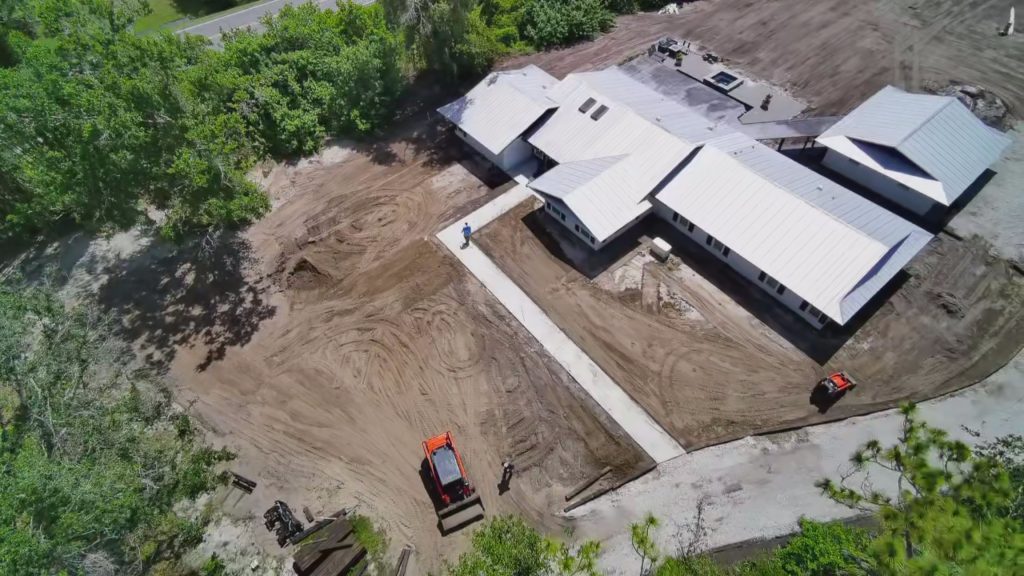
Commercial land clearing goes well beyond removing trees and brush. It involves the methodical removal of stumps, root systems, debris, and any existing structures or hardscape that would interfere with construction. For large-scale transitions, sequencing matters.
Our crews coordinate clearing with utility marking, erosion control installation, and phased construction timelines from day one. Rushing this phase creates problems that show up months later, often after a less experienced contractor has moved on. We plan the sequence upfront so that does not happen on our projects. You can learn more about the areas we serve across Florida.
Grading, Earthwork, and GPS Precision
Grading is where precision separates a good project from a costly one. The goal is to establish the correct slope and elevation across the entire site to support proper drainage, structural integrity, and the specific requirements of the planned construction.
Wingard uses GPS machine control leveling on commercial projects. Where traditional grading relied on survey stakes and operator experience, GPS systems use real-time satellite positioning combined with a site-specific digital terrain model to guide our equipment to within a fraction of an inch of the target elevation, automatically and continuously, across the entire site.
- Fewer survey stakes to manage and replace throughout the project
- Significantly reduced rework due to grading errors
- Faster completion on large commercial footprints
- More consistent sub-base preparation for paving, foundations, and drainage systems
- Better documentation for owner and engineer sign-off
For property managers overseeing large transitions, this means fewer surprises at the building slab stage and more confidence that the drainage design will perform as engineered. It also means our work is executed directly against the civil engineer's digital model, so verification is faster and disputes over tolerances are minimized.
Erosion Control and Stormwater Management
Florida's Department of Environmental Protection (FDEP) requires stormwater pollution prevention plans (SWPPP) for most commercial construction projects. Silt fences, sediment basins, and inlet protection must be in place before clearing begins, not after.
At Wingard, erosion control is built into our mobilization sequence. Our OSHA-compliant team coordinates all stormwater controls before ground disturbance begins, which protects neighboring properties, waterways, and your project from regulatory hold-ups that a less prepared contractor would not anticipate. See our full site preparation services for more on how we scope and execute this work.
Traditional Grading vs. GPS Machine Control
| Feature | Traditional Grading | GPS Machine Control |
|---|---|---|
| Elevation Accuracy | Manual estimation, operator skill | Sub-inch GPS precision |
| Rework Risk | Higher on large sites | Significantly reduced |
| Speed | Dependent on stake density | Continuous auto-correction |
| Documentation | Manual survey checks | Digital terrain records |
| Best For | Small residential lots | Commercial, large-scale sites |
Project Manager's Coordination Checklist
- 1Pre-Construction: Engage your land services contractor before finalizing civil engineering plans. At Wingard, we regularly catch grading challenges during pre-construction review that would have cost far more to fix after mobilization.
- 2Licensing Verification: Confirm your contractor holds all required Florida licenses and has experience with commercial-scale work in your specific region. Wingard is fully licensed and insured for commercial site prep throughout Florida.
- 3Permitting: Confirm your SWPPP is filed with the appropriate Water Management District before any ground disturbance. We handle this coordination on behalf of our clients.
- 4Stakeholder Communication: Establish clear protocols between your land clearing crew, civil engineer, and general contractor. Define who approves phase completions before the next phase begins.
- 5Inspection Scheduling: Schedule interim inspections after rough clearing, rough grading, and final grade. Our team stays on site through each milestone sign-off.
What Florida's Local Conditions Demand
Florida's wet season, running roughly June through September, limits workable grading days and increases erosion risk. Contractors who only work in Florida occasionally do not build their scheduling around this. Wingard crews do. We sequence our projects to stay productive through the summer months without creating compliance exposure for our clients.
Florida also has more protected species and wetland acreage than most states. Before clearing begins, a protected species survey and wetland delineation may be required depending on the site. Our team identifies these requirements during pre-application review, not after a stop-work order arrives.
Wingard's local advantage: We have built active working relationships with plan reviewers and inspectors across our service area. That familiarity shortens review timelines and prevents the small miscommunications that turn into project-week delays for teams who are new to a jurisdiction.
Frequently Asked Questions
Ready to Plan Your Commercial Site Prep?
Wingard Land Services brings licensed expertise, GPS-precision grading, and deep Florida regulatory knowledge to every commercial project. Call us or request a free estimate to get started.