

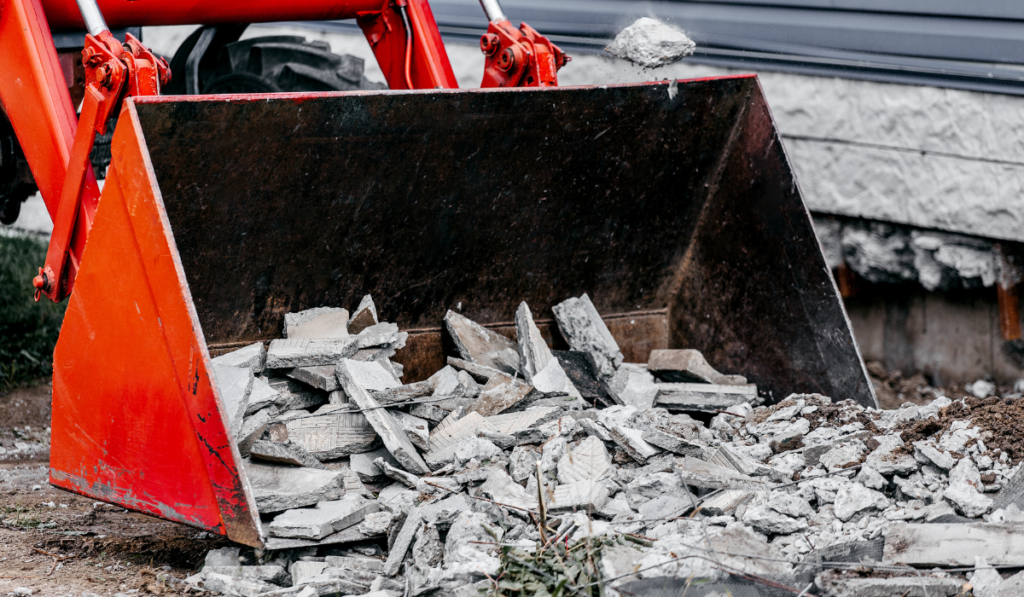
Concrete removal on Longboat Key involves breaking, processing, rebar extraction, and subgrade restoration, not simply loading slabs into a truck, and the difference between a contractor who understands that scope and one who does not shows up months after the work is complete. Property owners on Longboat Key who treat concrete and asphalt removal as a basic haul-off job consistently encounter the same set of problems: void spaces under new pavement, rebar stubs left at grade that conflict with new construction, and uncompacted subgrade that settles under load before the replacement surface has been in place a year. This post covers what concrete and asphalt removal actually involves, when a permit is required on Longboat Key, and what the site should look like when the job is done correctly.
Concrete and Asphalt Removal on Longboat Key: Scope, Permits, and What Proper Removal Leaves Behind
Why Concrete and Asphalt Removal Is Not a Simple Haul-Off
The misunderstanding starts with how the scope gets described. "Remove the old driveway" or "break out the pool deck" sounds like it ends when the material is off the property. In practice, there are three phases after the break-out that determine whether the site is actually ready for what comes next.
Breaking and processing. Concrete slabs and asphalt pavement have to be broken into manageable pieces before they can be loaded. The equipment used for that work: hydraulic breakers, excavators with demolition attachments, and plate compactors, affects how clean the break is and how much of the subgrade is disturbed in the process. A contractor using undersized equipment on a thick commercial slab or a reinforced pool deck takes longer, disturbs more of the surrounding grade, and produces irregular break patterns that complicate the next phase.
Rebar extraction. Reinforced concrete contains rebar that has to be cut and removed separately from the concrete rubble. Rebar left in place, even at depth, creates conflict points for future excavation, interferes with compaction equipment, and becomes a liability when someone hits a stub with a shovel or a foot. On Longboat Key, where properties regularly transition between uses and ownership, leaving rebar in the ground is a problem that transfers to the next owner or contractor without warning.
Subgrade restoration. Breaking and removing a concrete slab disturbs the subgrade beneath it. That disturbed soil has to be compacted before any new surface, concrete, pavers, asphalt, or landscaping, is installed above it. A new driveway poured over uncompacted subgrade will crack within the first rainy season. A new pool deck installed over a disturbed base will show movement within one to two years.
When a Permit Is Required for Concrete Removal on Longboat Key
The permitting threshold for concrete and asphalt removal on Longboat Key depends on the scope and location of the work. The Town of Longboat Key Building Department and the relevant county jurisdiction, Sarasota or Manatee depending on the project location, draw a line between minor surface removal and structural demolition that triggers formal permitting requirements.
Removing a residential driveway or a sidewalk section typically does not require a demolition permit on its own, though a right-of-way permit may be required if work touches the public right of way adjacent to the property. Removing a pool deck that is structurally connected to the pool shell, breaking out a foundation slab, or removing a commercial parking lot surface on a property that requires a site plan review are all scopes that move into permit territory.
The practical distinction is this: if the concrete being removed is attached to a structure, below grade, or part of a scope that will alter the drainage or grading of the site, confirm the permit requirement with the Town of Longboat Key before the work begins. If the scope is purely surface removal with no structural connection and no alteration to site drainage, a permit may not be required, but confirm that in writing from the building department, not from the contractor who wants to start quickly.
Longboat Key's position within a coastal high-hazard area adds an additional layer. If the removal work is within the Coastal Construction Control Line, a Florida DEP permit may be required regardless of whether the local permit threshold is met. This is covered in more detail on our existing Longboat Key construction debris removal guide.
Before and After: What Proper Removal Looks Like vs. What Low-Cost Contractors Leave
Consider a standard Longboat Key residential scenario: an aging concrete driveway and detached garage slab being removed to expand a landscape area before a property sale. Two bids come in. The lower bid specifies "concrete removal and haul-off." The higher bid specifies "concrete breaking, rebar removal, subgrade grading and compaction, and debris haul-off to an approved facility."
The low-bid result: The slab is broken and loaded. Rebar stubs are cut flush but not extracted. The subgrade is uneven and loose where the concrete was pried up. The landscape contractor who arrives two weeks later has to rent a plate compactor and spend a half day stabilizing the surface before topsoil can be placed. The property owner absorbs that additional cost, which was not in the landscape budget.
The complete-scope result: The slab is broken and processed, rebar is extracted and hauled separately, the subgrade is graded level and compacted to a stable condition, and all debris is removed to an approved facility. The landscape contractor arrives to a clean, stable surface and starts grading immediately. No additional prep cost, no delay.
The difference in total project cost between those two outcomes is rarely as large as the bid gap suggests, because the low-bid scope transfers cost to the next trade rather than eliminating it.
Disposal on a Barrier Island: What Changes for Longboat Key
Concrete and asphalt debris generated on Longboat Key has to leave the island over one of two causeways, both of which carry posted weight limits that affect haul truck configurations. Heavy concrete loads require confirmed weight compliance, and multiple smaller haul trips are sometimes required where a single full load would not be permissible.
Concrete rubble from residential projects is typically recyclable at approved facilities and does not require the same disposal stream as general construction debris or hazardous materials. Asphalt may also be accepted for recycling depending on the facility. Confirming disposal options in advance, rather than discovering them when the truck is loaded, keeps the project on schedule and reduces disposal cost where recycling is available.
Our concrete and asphalt demolition services and site preparation services are coordinated as a single scope when both are in play, and you can review our full service capabilities on the Wingard Land Services services page.
Frequently Asked Questions About Concrete Removal on Longboat Key
Do I need a permit to remove a concrete driveway on Longboat Key?
For a standard residential driveway surface removal with no structural connection and no alteration to site drainage, a demolition permit is often not required. However, work within the public right of way requires a right-of-way permit, and any removal within the Coastal Construction Control Line may require a separate Florida DEP permit. Confirm the specific requirement with the Town of Longboat Key Building Department before work begins, permit thresholds vary by scope and location on the island.
What happens if rebar is left in the ground after concrete removal?
Rebar left below grade after concrete removal creates conflict points for future excavation, irrigation work, and foundation digging. It also interferes with compaction equipment during subgrade restoration. On properties where new hardscape, pool decks, or foundations will be installed over the cleared area, rebar stubs that were not fully extracted will surface as problems during the next construction phase, often as a change order when the next contractor hits them unexpectedly.
Does concrete from Longboat Key have to go to a special disposal facility?
Concrete rubble from residential and commercial demolition on Longboat Key must be hauled to an approved construction and demolition debris facility. Concrete is generally accepted for recycling at C&D facilities and is not treated as general solid waste. Asphalt may also be recyclable depending on the facility. The haul route off the island requires compliance with causeway weight limits, which affects truck sizing and the number of haul trips required for larger volumes.
What is subgrade compaction and why does it matter after slab removal?
Subgrade compaction is the process of mechanically densifying the soil beneath a removed concrete or asphalt surface before any new material is placed above it. When a slab is broken and removed, the soil underneath is disturbed and loose. New pavement, pavers, or concrete poured over uncompacted subgrade will settle unevenly as the loose soil consolidates under load, producing cracking, heaving, and surface failure within the first few years of use. Proper compaction after slab removal is not optional on Longboat Key's sandy soil profile.
Have a concrete or asphalt removal project on Longboat Key? Contact our team for a free estimate that covers the full scope: breaking, rebar extraction, subgrade restoration, and haul-off.
Request a Quote