

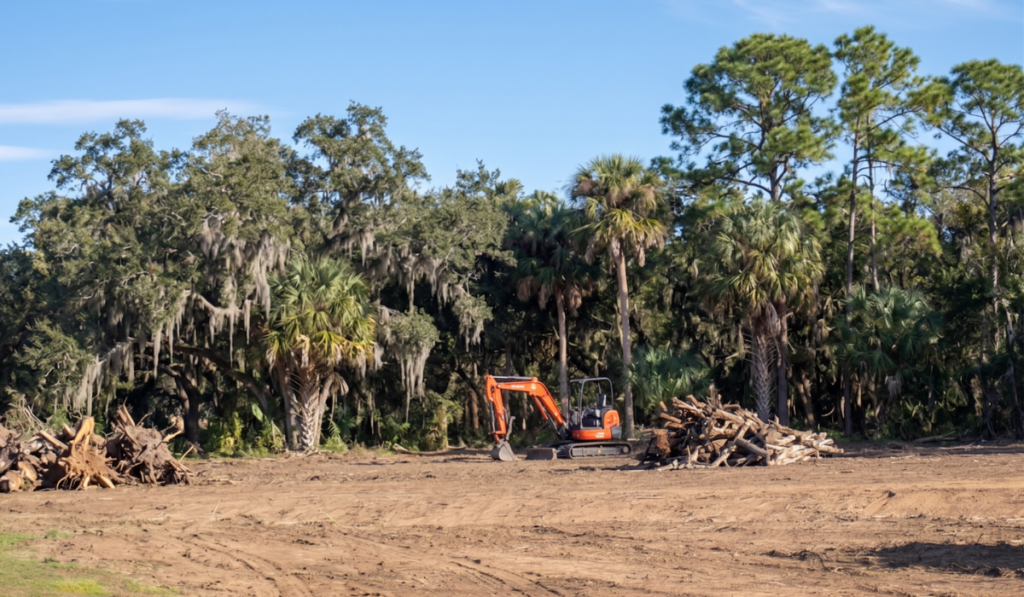
Land clearing in Bradenton for pool excavation requires tree removal, root zone clearing, underground utility locates, and access route preparation before the excavator can mobilize, steps that most homeowners do not realize are their responsibility to coordinate in advance. Pool contractors in Manatee County show up to dig, not to clear. When the site is not ready, projects stall, mobilization fees accumulate, and the work that should have happened before the excavator arrived gets priced as a change order. This post covers what backyard pool site prep in Bradenton actually involves, what goes wrong when tree roots are not addressed correctly, and the step-by-step preparation sequence that keeps your project on schedule.
Backyard Pool Site Prep in Bradenton: The Clearing and Preparation Steps That Have to Happen Before the Excavator Mobilizes
Why Pool Excavation Requires More Site Prep Than Most Homeowners Expect
A pool contractor's excavation crew is there to dig the pool shell. They are not equipped to remove trees, grind stumps, address root systems, or prepare the access route their equipment needs to reach the backyard. When those elements are not handled before their scheduled mobilization date, one of two things happens: the crew turns around and reschedules, or they attempt to work around obstacles and produce a result that creates problems after the pool is installed.
In Bradenton and Manatee County, where mature tree canopy is common on residential lots and overhead utility lines run through many backyards, the site preparation requirements before a pool dig are specific and sequential. Getting them right is not complicated, but it requires coordination with the right contractors before the pool company's excavator shows up.
Step 1: Underground Utility Locates
Before any digging begins on a Bradenton residential property, Florida law requires calling 811 to request underground utility locates. Sunshine State One Call of Florida coordinates the locate request and dispatches utility companies to mark the locations of buried lines, electric, gas, water, sewer, and telecommunications, within the excavation area.
This step has to happen before land clearing begins, not just before the pool excavation. Tree removal and stump grinding involve equipment and roots that can reach buried utility lines. Knowing where those lines run before clearing begins determines where root grinding stops and how access routes are laid out to avoid disturbing marked corridors.
The locate request should be submitted at least three business days before work is scheduled to begin. In Manatee County's active construction season, scheduling this early and confirming locate completion before clearing begins is the correct sequence.
Step 2: Permit Coordination
Pool construction in Manatee County requires a building permit from Manatee County Building and Development Services. The permit application triggers a review of the site plan, which includes the pool location relative to property lines, setbacks, and existing structures. Tree removal permits may also be required depending on the size and species of trees within the clearing area, Manatee County's tree protection ordinance applies to residential lots and requires a permit for removal of trees above certain caliper thresholds.
Clearing trees before confirming the tree removal permit status is a mistake that results in code enforcement issues on top of an already active construction project. The permit sequence should be confirmed before clearing begins, not assumed.
Step 3: Tree Removal and Root Zone Clearing
Tree removal for a pool dig is not the same as standard tree removal. The root zone, the lateral spread of a tree's root system, which typically extends well beyond the canopy drip line, has to be cleared to a depth that eliminates root conflict with the pool shell and the surrounding deck structure.
What happens when root zone clearing is not done correctly is one of the most expensive post-installation problems in the pool industry. Roots left at shallow depth beneath or adjacent to the shell continue to grow. As they expand, they exert lateral pressure against the pool wall and shell. Deck pavers crack and shift. In cases where roots were left directly beneath the shell, hydrostatic pressure from root growth can cause structural movement that affects the interior finish and plumbing.
In Bradenton, where live oaks, laurel oaks, and slash pines are common on residential lots, root systems can extend ten to fifteen feet or more from the trunk base. Any tree within that radius of the pool footprint needs to be assessed for root conflict, and any root mass within the excavation envelope needs to be ground and removed before the pool contractor arrives.
Our land clearing services include tree removal and root zone grinding specifically scoped for pool site preparation, not general vegetation clearing that leaves root mass in the ground.
Step 4: Access Route Preparation
Pool excavation equipment, typically a mini excavator, has to reach the backyard through a gate opening or a designated access corridor along the side of the house. In Bradenton's residential neighborhoods, that access route frequently involves narrow side yards, existing landscaping, irrigation systems, and overhead obstructions that have to be addressed before equipment can move through safely.
The minimum gate width for most mini excavators used in residential pool digs is 36 to 48 inches depending on the machine configuration. If the existing gate is narrower, a fence section has to be temporarily removed. If overhead lines run across the access path, the excavator operator needs to know their clearance height before moving the equipment under them.
Irrigation lines running through the access path should be located and marked before equipment moves through. A mini excavator track does not distinguish between a root and a two-inch irrigation main, and repairing a crushed irrigation line mid-project adds a service call and a delay to a schedule that did not budget for it.
Step 5: Soil Disposition Plan
A pool excavation in Manatee County generates significant spoil material, the soil removed to create the pool shell. That spoil has to go somewhere. Most residential lots do not have the space to stockpile the full excavation volume on-site without creating drainage problems or blocking access for subsequent construction phases.
Coordinating spoil haul-off in advance, not as an afterthought after the dig is complete, keeps the project site manageable and prevents the excavation crew from having to stop work while waiting for dump trucks that were not pre-scheduled. Our excavation and site prep services include soil haul-off coordination as part of the project scope so disposal is not a problem the homeowner has to solve separately.
For homeowners in the Bradenton area looking for more information on how site work connects to the construction process, our Bradenton area service page covers the full scope of what we handle locally.
Frequently Asked Questions About Pool Site Prep and Land Clearing in Bradenton
Do I need a permit to remove trees before a pool dig in Bradenton?
In most cases, yes. Manatee County's tree protection ordinance requires a permit for removal of trees above certain caliper thresholds on residential properties. The pool building permit does not automatically authorize tree removal, tree removal permits are a separate application that should be confirmed before clearing begins. Removing protected trees without a permit results in code enforcement action and potential replanting requirements.
How far from a pool do tree roots need to be removed?
Root systems on common Bradenton trees like live oaks and slash pines can extend ten to fifteen feet or more from the trunk base. Any root mass within the pool footprint and the surrounding deck area needs to be ground and removed before excavation begins. Root clearing should extend at least two to three feet below the planned excavation depth to eliminate the risk of root growth exerting pressure against the pool shell after installation.
What is the minimum gate width needed for pool excavation equipment?
Most mini excavators used for residential pool digs in Manatee County require a clear gate or access opening of 36 to 48 inches minimum, depending on the machine. Confirm the specific equipment dimensions with your pool contractor before scheduling the dig, then assess the existing access corridor for width, overhead clearance, and any irrigation or utility lines that run through the path.
Who is responsible for site clearing before a pool excavation in Bradenton?
The homeowner is responsible for coordinating site preparation before the pool contractor's excavation crew arrives. Pool companies dig the pool, they do not perform tree removal, stump grinding, root zone clearing, access route preparation, or spoil haul-off coordination. Hiring a land clearing and excavation contractor to handle the pre-dig site prep separately, and sequencing that work before the pool excavation date, is the correct approach.
Planning a pool dig in Bradenton and need the site cleared and prepped before your excavation crew arrives? Contact our team for a free estimate on the full pre-dig clearing scope.
Get a Free Estimate