

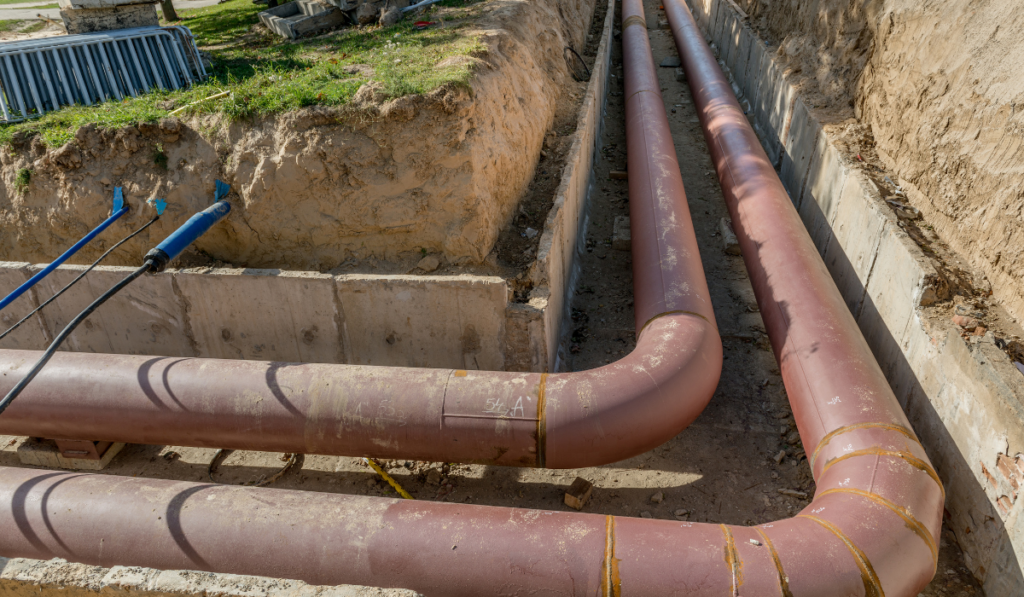
Underground utility installation in Bradenton involves coordination with Manatee County Utilities for water and sewer connections, the Florida Department of Environmental Protection for sanitary systems, and the Southwest Florida Water Management District for drainage connections, a more layered permitting and inspection process than a single building permit covers, and one where missing a coordination step early creates inspection failures that are significantly more expensive to correct after the trench is backfilled than before. This post covers what the pre-installation sequence looks like on a Bradenton residential or commercial project, how Bradenton's specific soil and water table conditions affect trench work, and what staged inspections require at each phase before the next phase of the project can advance.
From Utility Locate to Final Inspection: The Underground Utility Installation Process in Bradenton and Manatee County
Why Bradenton Utility Installation Is More Layered Than Property Owners Expect
Property owners planning new construction or renovation in Bradenton often assume that utility installation is covered by the building permit and managed by the general contractor. In practice, underground utility installation in Manatee County involves multiple permit applications, multiple utility authority approvals, and multiple staged inspections that are independent of the building permit process — and each one has its own timeline that affects when the next phase of construction can begin.
Water service connections in Bradenton require a connection permit from Manatee County Utilities, a backflow prevention device inspection, and pressure testing before the connection is approved. Sanitary sewer connections require a separate sewer service permit, a DEP-compliant installation, a video inspection in some cases, and written authorization from Manatee County Utilities before the service is activated. Storm drainage connections that discharge to the county's storm system require SWFWMD Environmental Resource Permit compliance and county stormwater authority review before the outfall connection is approved.
None of these processes operate on the building permit's timeline. A property owner who receives a building permit and assumes utility installation can begin immediately often discovers that the utility authority permits have not been applied for, and the utility installation sequence cannot begin until each separate application is approved. In Bradenton's current market, where Manatee County Utilities processes a high volume of connection requests, that gap between building permit issuance and utility permit approval can add three to six weeks to a project schedule that was not planned around it.
The Pre-Installation Sequence on a Bradenton Residential or Commercial Project
The correct pre-installation sequence on a Bradenton utility project begins well before the first trench is open. Each step in the sequence has to be completed in order before the next can begin, and skipping or compressing any step creates downstream problems that are harder and more expensive to resolve than the time that was saved.
Step 1 — Sunshine 811 utility locate request: Florida law requires calling 811 to request underground utility locates at least three business days before any digging begins. The locate marks the approximate position of existing buried utilities — electric, gas, water, sewer, and telecommunications — within the excavation area. Digging without confirms locates is illegal and creates liability for any damage to existing utilities.
Step 2 — Utility authority permit applications: Water service, sewer service, and drainage connection permits are submitted to Manatee County Utilities and SWFWMD separately from the building permit. Each application requires a site plan showing the proposed utility installation, connection point locations, and service entry into the structure.
Step 3 — Pre-construction meeting: For commercial projects and larger residential installations, Manatee County Utilities requires a pre-construction meeting before installation begins. This meeting confirms the installation sequence, identifies the required inspection hold points, and establishes the inspection notification process.
Step 4 — Staged installation with inspection hold points: Utility installation in Manatee County proceeds through staged inspections. The pre-backfill inspection — verifying pipe elevation, bedding, joint assembly, and separation distances — must be passed before any trench is covered. Backfilling before the inspection is approved results in mandatory re-excavation.
Step 5 — Pressure testing and final inspection: Waterline installations require pressure testing at a specified duration and pressure before service is approved. Sewer installations may require a video inspection. Final connection authorization from Manatee County Utilities is issued after all inspections pass.
Bradenton-Specific Challenges: High Water Table Near the Manatee River and Braden River Corridors
Bradenton's topography creates a utility installation challenge that contractors unfamiliar with this market underestimate: the high water table in low-lying areas near the Manatee River, Braden River, and their tributary drainage corridors. Properties within several hundred feet of these water bodies — and many properties further inland in areas with poorly drained sandy soils — can encounter groundwater within two to three feet of the surface during active rainy season conditions.
A trench that opens dry in the morning in these areas can be partially flooded by afternoon. That affects bedding material placement, compaction quality around the pipe, and the accuracy of elevation measurements before the pre-backfill inspection. Contractors who do not actively manage trench dewatering in these conditions place pipe in unstable bedding, produce compaction that looks adequate but has not been achieved through the full lift depth, and create installations that settle or shift out of grade within the first wet season after installation.
Dewatering on Bradenton utility installation projects in high water table zones requires a dewatering pump running continuously during active installation, a discharge point that complies with SWFWMD dewatering permit requirements (which may require a separate permit for larger installations), and bedding material that is placed and compacted in controlled lifts rather than dumped and graded in a single pass. This is not an unusual requirement for experienced utility contractors working in coastal Manatee County. It is a standard operating condition that the project schedule and budget have to account for.
Our underground utility installation services are executed with full inspection compliance and active dewatering management on projects in high water table zones. For projects where utility installation is part of a broader site preparation scope, our site preparation services coordinate both phases under one project schedule. A full overview of our Bradenton-area capabilities is on our Bradenton area service page, and our complete service offerings are on the Wingard Land Services services page.
Frequently Asked Questions About Underground Utility Installation in Bradenton
What permits are required for underground utility installation in Bradenton?
Underground utility installation in Bradenton typically requires a building permit for the overall project, a water service connection permit from Manatee County Utilities, a sewer service permit from Manatee County Utilities, and SWFWMD Environmental Resource Permit compliance for drainage connections that discharge to the county storm system. Each permit has its own application, review timeline, and inspection requirements that are independent of the building permit process.
How does the high water table affect utility installation in Bradenton?
Low-lying areas near the Manatee River, Braden River, and coastal drainage corridors in Bradenton can have groundwater within two to three feet of the surface during rainy season conditions. This requires active trench dewatering during installation, bedding material placed in controlled lifts rather than bulk placement, and a discharge point that complies with SWFWMD dewatering requirements. Contractors who do not manage dewatering actively in these conditions produce installations that settle out of grade within the first wet season.
What is a pre-backfill inspection and why does it matter in Manatee County?
A pre-backfill inspection is a required staged inspection in Manatee County where the utility authority inspector verifies pipe elevation, bedding material placement, joint assembly, and separation distances before any trench is backfilled. The inspector must approve the open trench before soil is placed back over the pipe. Contractors who backfill before this inspection is completed face mandatory re-excavation of the installed line — a correction that costs significantly more than the time that was saved by not waiting for the inspection appointment.
Have a utility installation project in Bradenton or Manatee County? Contact our team for a free estimate and a straightforward conversation about permit sequencing, inspection requirements, and project timeline.