

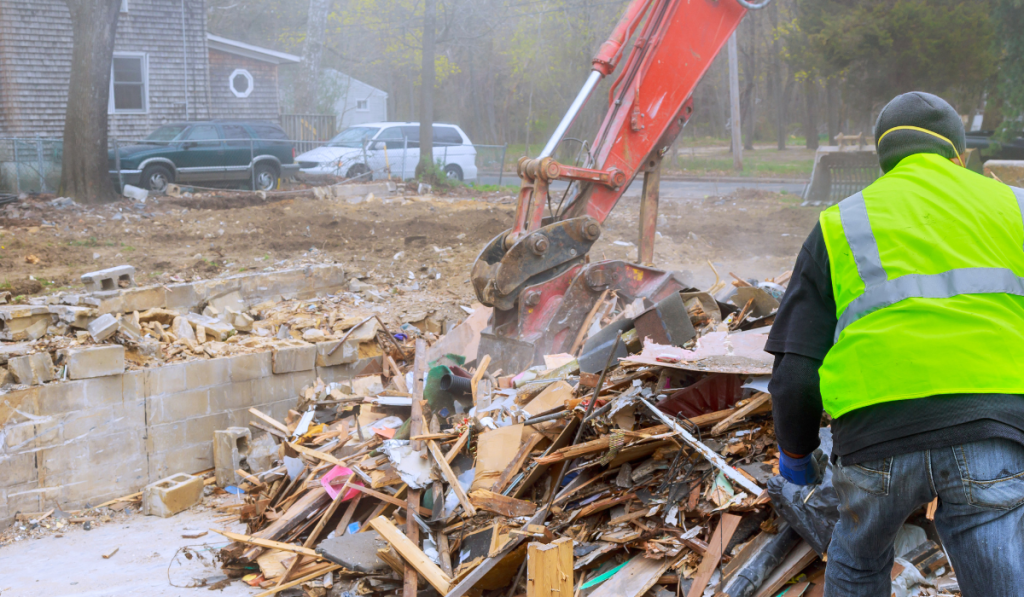
Construction debris removal on Longboat Key is governed by a layered set of requirements: coastal high-hazard area regulations, Sarasota and Manatee County permit rules, deed-restricted community standards, and Florida Department of Environmental Protection guidelines, that do not apply to demolition and cleanup projects on the mainland. Contractors and property owners who approach a Longboat Key project without understanding those layers routinely encounter permit holds, HOA violations, and disposal complications that add significant time and cost before the site is clear. This post covers what makes debris removal on Longboat Key different and what to confirm before any contractor mobilizes.
Longboat Key Demolition Cleanup: Permits, Access, Debris Types, and What the Coastal Environment Requires
Why Longboat Key Is Not a Standard Demolition Site
Longboat Key is a barrier island municipality that straddles Sarasota and Manatee Counties. That jurisdictional split alone creates complexity, depending on which end of the island a project sits, permitting may run through the Town of Longboat Key Building Department, Sarasota County, or Manatee County, each with its own submittal portal, review timeline, and inspection workflow.
Beyond jurisdiction, Longboat Key sits within a coastal high-hazard area as designated under Florida's Coastal Management Program. That designation affects what can be demolished, how debris must be handled, and what environmental buffers apply to properties adjacent to the Gulf, Sarasota Bay, and associated wetlands. Work that would require a single permit on a Bradenton lot may require coordinated approvals from the town, the county, and the Florida Department of Environmental Protection on Longboat Key.
Contractors who work Longboat Key regularly know this. Those who show up occasionally do not, and that unfamiliarity becomes your problem once the project starts.
HOA and Deed Restriction Requirements That Affect Debris Removal
A significant portion of Longboat Key's residential and commercial properties fall within deed-restricted communities managed by homeowners associations. These associations often have their own rules governing construction activity, approved work hours, required debris containment on-site, restrictions on staging equipment in common areas or on street rights of way, and requirements for daily site cleanup during active demolition.
HOA violations on Longboat Key are not minor inconveniences. They can result in stop-work notices issued independently of the municipal permit process, fines, and required remediation that delays project completion. Confirming HOA requirements before mobilization is not optional, it is part of the pre-project scope review on every Longboat Key job.
The practical implication: your contractor needs to have reviewed the community's CC&Rs and confirmed compliance requirements before the first truck arrives, not after a neighbor files a complaint on day two.
Debris Types and How Disposal Requirements Differ on a Barrier Island
Not all construction debris is handled the same way, and on Longboat Key the distinction between debris types carries regulatory weight that it may not on a standard demolition site.
| Debris Type | Disposal Requirement | Longboat Key Consideration |
|---|---|---|
| Concrete and masonry | Inert C&D landfill or recycling facility | Heavy loads require confirmed road weight limits on island access routes |
| Wood framing and lumber | C&D landfill; some recycling options available | Older structures may contain lead paint - requires separate handling protocol |
| Roofing materials | C&D landfill; asphalt shingles may be recycled | Pre-1980 roofing may contain asbestos - NESHAP survey required before demolition |
| Hazardous materials (asbestos, lead) | Licensed abatement contractor; separate disposal stream | Cannot be commingled with general C&D debris; abatement must precede demolition |
| Vegetation and organic debris | Mulching, composting, or green waste facility | Coastal buffer vegetation requires DEP review before removal in setback zones |
The asbestos and lead requirements deserve particular attention on Longboat Key. The island has a high concentration of residential and commercial structures built before 1980, when both materials were in common use. Florida follows the federal NESHAP (National Emission Standards for Hazardous Air Pollutants) requirements for asbestos, which mandate a thorough inspection by an accredited inspector before any demolition or renovation that disturbs regulated materials. Skipping this step is a federal violation, not just a local permit issue.
Truck Haul-Off vs. Barge Access: What Each Option Actually Means for Your Timeline and Cost
Getting debris off Longboat Key requires crossing one of two causeways, the Longboat Key Bridge on the north end connecting to Manatee County, or the John Ringling Causeway connection via St. Armands on the south end connecting to Sarasota. There is no direct barge access from most residential sites, and the causeways carry posted weight limits that affect what truck configurations can be used.
For large-scale demolition projects generating significant concrete and masonry debris, this creates a practical constraint: heavy haul trucks may require permits for causeway crossings, loads may need to be split across multiple smaller trucks, and scheduling has to account for island traffic patterns that compress usable haul hours during peak season.
On commercial demolition projects with very high debris volumes, waterfront access points may allow for barge staging of debris containers; but this requires coordination with the Florida Fish and Wildlife Conservation Commission, DEP, and the property's riparian rights holder, and adds permitting time that needs to be built into the project schedule from the start.
The honest answer for most residential and mid-scale commercial projects on Longboat Key is that truck haul-off is the practical choice, and the cost and timeline implications of the access constraints need to be factored into the bid rather than discovered mid-project.
Environmental Buffers and Coastal Setback Requirements
Properties on Longboat Key that sit adjacent to the Gulf of Mexico, Sarasota Bay, or associated coastal wetlands are subject to setback requirements under both the Town of Longboat Key Land Development Code and Florida's Coastal Construction Control Line (CCCL) regulations administered by the Florida Department of Environmental Protection.
Demolition activity within the CCCL requires a separate DEP permit in addition to the local building permit. Debris staging, equipment operation, and haul-off routes all have to respect setback boundaries during the project. Contractors operating within these setbacks without the correct DEP authorization face stop-work orders and potential restoration requirements that are significantly more expensive than the permit fees they avoided.
For a full overview of how Wingard Land Services approaches demolition and debris removal on coastal and barrier island projects, visit our service page. Our coverage of the Venice and Sarasota County coastal market is detailed on our Venice and Sarasota County area page, and you can view the full regional service footprint on our areas we serve page.
Frequently Asked Questions About Construction Debris Removal on Longboat Key
Do I need a permit for construction debris removal on Longboat Key?
Yes. Demolition and debris removal on Longboat Key requires permits through the Town of Longboat Key Building Department, and depending on the project location and scope, may also require coordination with Sarasota or Manatee County and the Florida Department of Environmental Protection. Projects within the Coastal Construction Control Line require a separate DEP permit in addition to local approvals. Wingard Land Services is fully registered with Florida municipalities and manages permit coordination as part of every project scope.
Is an asbestos survey required before demolishing a structure on Longboat Key?
Yes. Federal NESHAP regulations require a thorough asbestos inspection by an accredited inspector before any demolition or renovation that may disturb regulated materials. Given the concentration of pre-1980 structures on Longboat Key, this is a standard pre-demolition requirement on most projects. Asbestos abatement must be completed and documented before general demolition begins.
How does HOA approval affect a demolition or debris removal project on Longboat Key?
Many Longboat Key properties sit within deed-restricted communities that have independent rules governing construction activity, including work hours, debris containment, equipment staging, and daily site cleanup requirements. HOA approval or notification may be required before work begins, and violations can result in stop-work notices issued outside of the municipal permit process. Confirming HOA requirements before mobilization is a standard part of pre-project planning on Longboat Key.
Can debris be barged off Longboat Key instead of trucked out?
Barge removal is logistically possible for waterfront commercial projects with direct water access, but it requires coordination with the Florida Fish and Wildlife Conservation Commission, DEP, and the property's riparian rights holder, and adds permitting time. For most residential and mid-scale commercial projects, truck haul-off across the causeways is the practical choice. Load weights and truck configurations need to be planned around causeway weight restrictions.
Planning a demolition or debris removal project on Longboat Key? Contact our team for a free estimate and a direct conversation about permits, access, and what your specific site requires.