

Land clearing in Sarasota County requires a pre-clearing tree survey before any vegetation comes down on a parcel, a requirement that applies under the county’s Tree Protection Ordinance and that distinguishes Sarasota County’s process from the way clearing projects are typically managed in neighboring Manatee County. Property owners who schedule equipment without confirming tree permit status first risk stop-work orders, replanting requirements, and permit delays that set back every subsequent scope of work. Understanding the regulatory framework before mobilization is not optional here — it is the work.
Land Clearing in Sarasota County: Tree Ordinance Requirements, SWFWMD Permitting, and the Correct Clearing Sequence
Sarasota County’s Tree Protection Ordinance Goes Further Than Most Property Owners Expect
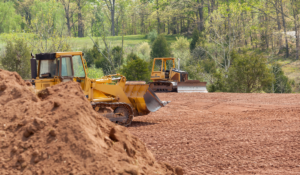
Sarasota County’s Tree Protection Ordinance is one of the more detailed in the region. It establishes canopy coverage minimums that apply to residential and commercial parcels after clearing and development, which means the clearing plan cannot simply remove all existing vegetation and leave compliance for the landscaping contractor to resolve after construction. The canopy requirement is assessed against the post-development site, and if the existing trees being removed would have counted toward that minimum, replacement plantings must be specified in the clearing plan before the county issues a tree removal permit.
Heritage trees receive additional protection. Sarasota County designates trees above a certain diameter at breast height as heritage specimens, and removal of a heritage tree requires a separate review process that considers the tree’s health, location, and whether relocation is feasible before removal is approved. For larger parcels with significant canopy, this review can add weeks to the pre-clearing timeline. A land clearing contractor who performs a site inventory early and flags potential heritage specimens gives the project team time to route the clearing plan around protected trees or initiate the review process without delaying mobilization.
The pre-clearing survey is not something that can be completed the week before equipment arrives. A licensed arborist must assess the site, classify each tree by species and diameter, and document the inventory in a format Sarasota County’s Natural Resources Department accepts. That documentation becomes part of the tree permit application, which must be approved before clearing begins. Projects that skip this step and clear first face mitigation requirements based on the county’s canopy replacement formula, which consistently costs more than the permit process would have.
When SWFWMD’s Environmental Resource Permit Is Required for Clearing Projects
The Southwest Florida Water Management District triggers an Environmental Resource Permit requirement for land clearing and earthwork projects that disturb one acre or more of land in Sarasota County. Below that threshold, a general permit or exemption may apply, but the qualifying conditions are specific and must be confirmed before assuming a project falls below the review trigger.
The acre threshold is often misunderstood as applying only to sites that are one acre in total size. It applies to the area of disturbance, not the total parcel size. A five-acre parcel where clearing is limited to a two-acre building envelope still triggers the ERP threshold. On projects near wetlands, surface water bodies, or the Intracoastal Waterway, SWFWMD may assert jurisdiction over disturbances well below one acre if the clearing activity is within a regulated buffer or drainage basin.
The ERP application requires a stormwater management plan, an erosion and sediment control plan, and, in most cases, a wetland delineation confirming that the clearing boundary does not encroach on jurisdictional wetlands. SWFWMD review timelines for standard ERP applications in Sarasota County typically run 30 to 60 days after a complete application is submitted. Starting the ERP process early is one of the most effective ways to prevent clearing delays from pushing back downstream construction milestones. The site preparation scope that follows clearing depends directly on when clearing can legally begin, and ERP delays compress every schedule that follows.
Clearing Sequencing for Sarasota County Parcels and Why the Order Matters
The sequence of land clearing operations affects both compliance and the quality of the site that grading contractors inherit after clearing is complete. The correct sequence on most Sarasota County residential and commercial parcels is: tree removal first, followed by understory vegetation clearing, followed by stump grinding and root raking, followed by debris removal and rough grading preparation.
Tree removal should happen before understory clearing because large equipment operating through standing brush blinds operators to root zones, stumps, and underground infrastructure. Clearing understory first and then felling trees into bare ground also increases soil compaction from repeated equipment passes over the same areas. The stump grinding phase follows after all trees are removed rather than being completed incrementally, because grinding stumps at the same time as tree removal creates a debris field that interferes with the removal equipment’s access.
Root raking after stump grinding is a step that lower-cost clearing contractors often omit. Leaving root material in place creates voids as organic material decomposes, which causes uneven settlement in fill placed during grading. In Sarasota County’s sandy soils, which drain freely and allow organic decomposition to happen relatively quickly, root-related settlement issues appear in pavement, slabs, and finished grade within one to three years of construction. A thorough root rake immediately after stump grinding adds cost at the clearing phase but eliminates a more expensive remediation scope later. Professional land clearing services account for this in the scope from the start.
For developers and builders managing multiple active sites across Sarasota County, clearing sequencing also affects how quickly each site can transition to the grading phase. Sites where clearing debris is removed promptly and stump grinding is completed to the correct depth are ready for rough grading without a delay phase. Sites where debris piles remain or stumps are ground to shallow depth require an additional mobilization before grading can begin. The full range of land development services Wingard provides across Sarasota and Manatee Counties is built around this integrated approach, with clearing and grading coordinated as a single scope rather than two separate handoffs.
Frequently Asked Questions
Do I need a tree permit for land clearing in Sarasota County?
Yes, in most cases. Sarasota County’s Tree Protection Ordinance requires a tree removal permit for clearing projects that involve the removal of trees above a specified size. A pre-clearing tree survey must be completed and submitted with the permit application before clearing begins. Projects that remove trees without a permit face replanting requirements and fines calculated using the county’s canopy replacement formula.
What is the SWFWMD ERP threshold for land clearing in Sarasota County?
Projects that disturb one acre or more of land require a SWFWMD Environmental Resource Permit. The threshold applies to the area of disturbance, not the total parcel size. Projects near wetlands, surface water bodies, or regulated drainage features may require ERP review below the one-acre threshold. ERP review timelines typically run 30 to 60 days after submission of a complete application.
How is land clearing in Sarasota County different from Manatee County?
Sarasota County’s Tree Protection Ordinance includes canopy coverage minimums and heritage tree protections that are more detailed than Manatee County’s requirements. Sarasota County also requires a tree survey and a permit before clearing, while the specific submission requirements and review sequences differ between the two jurisdictions. Contractors who work regularly across both counties are familiar with these differences and can manage the permit process for projects in either market.
Does stump grinding have to happen immediately after land clearing in Sarasota County?
Sarasota County does not mandate a specific timeline between tree removal and stump grinding, but delaying stump grinding allows root zones to begin decomposing in place, which creates soil settlement problems after grading. Best practice is to complete stump grinding and root raking as part of the same clearing mobilization before grading equipment arrives on site.